It’s easy to be seduced by the low prices lining the shelves of American stores. From clothing to electronics to home goods, the “Made in China” label usually comes with a price tag too good to pass up. But as Edouard Prisse argues in We Are Funding China’s Growth That Must Stop!, those bargain prices carry a cost far higher than most consumers realize.
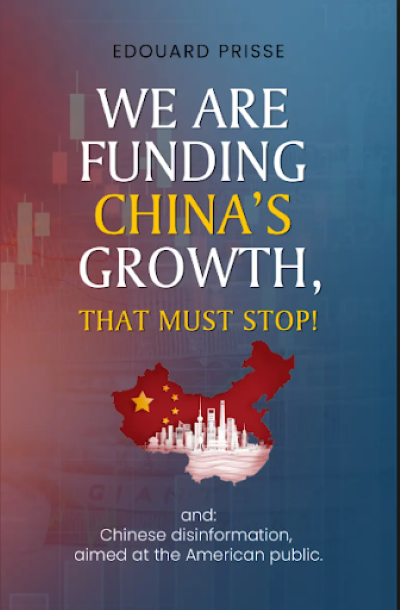
Behind every low-cost Chinese product is a system designed not for efficiency, but for control. The Chinese government, led by the Communist Party, has mastered the art of suppressing wages, manipulating labor markets, and using authoritarian power to maintain rock-bottom costs. It’s not that Chinese workers are inherently more productive—it’s that their rights are suppressed, their wages are kept artificially low, and their ability to protest or negotiate is crushed by the state.
As Prisse notes, China’s labor force is massive—over 400 million rural workers were absorbed into industrial production over the past two decades. While incomes have risen slightly, the majority of China’s manufacturing base is still far below the standards seen in Western democracies. According to Prisse’s data, in 2020 a Chinese factory worker earned about 29 percent of what a U.S. worker made. That figure is no accident. It’s the result of deliberate government policy.
The CCP doesn’t allow independent labor unions. Strikes are rare and dangerous. Workers can’t bargain freely for better conditions. If one group becomes too costly, the state simply shifts production elsewhere. Meanwhile, China’s internal surveillance and social credit systems ensure that disobedient citizens face blacklisting, punishment, or social exclusion. In this environment, cheap labor isn’t a byproduct of economic development—it’s the cornerstone of authoritarian control.
And while this control ensures low prices, the real irony is that the money saved by American consumers ends up funding the very regime suppressing those workers. Every dollar spent on Chinese imports contributes to the country’s growing foreign reserves, now estimated at over $3 trillion. That money isn’t used to build a more open society. It’s used to project power—investing in foreign ports, financing strategic infrastructure, and supporting regimes aligned with Beijing’s interests.
Prisse warns that U.S. consumers, often unknowingly, have become complicit in this cycle. The West wants cheap goods, and China offers them. But the price is paid in more than just lost jobs. It’s paid in lost leverage, weakened manufacturing, and a steady transfer of wealth from open societies to an authoritarian state.
The deeper danger is that these patterns become normalized. If cheap means good, and if cost always outweighs principle, then the West will continue trading long-term sovereignty for short-term savings. In Prisse’s words, “we are funding our own decline.”
Changing this requires more than guilt—it requires awareness. Consumers need to ask not just what something costs, but why it costs so little. Policymakers need to rethink trade rules that allow authoritarian pricing models to flood democratic markets. And businesses must stop pretending that savings from China come without strings attached.
The next time you see a bargain, think twice. The real cost may not be on the label—but it’s being paid, every day, in lost freedom, manipulated economies, and rising authoritarian power.